Why I Joined My AI Companion
I have spent the better part of three decades asking one question: What does this person actually need?
Not what they asked for. Not what the spec said. What they actually need - when they’re cold on a ski lift, navigating an unfamiliar place, holding a device with one hand, or staring at a blank computer screen trying to imagine a building that doesn’t exist yet.
That question has taken me to some strange and wonderful places.
It started with ski lifts and smartphones.
Early in my career, I was working on physical products where human error had real consequences - ski lifts and gondola systems, mobile and medical devices, and precision laser cutting systems.
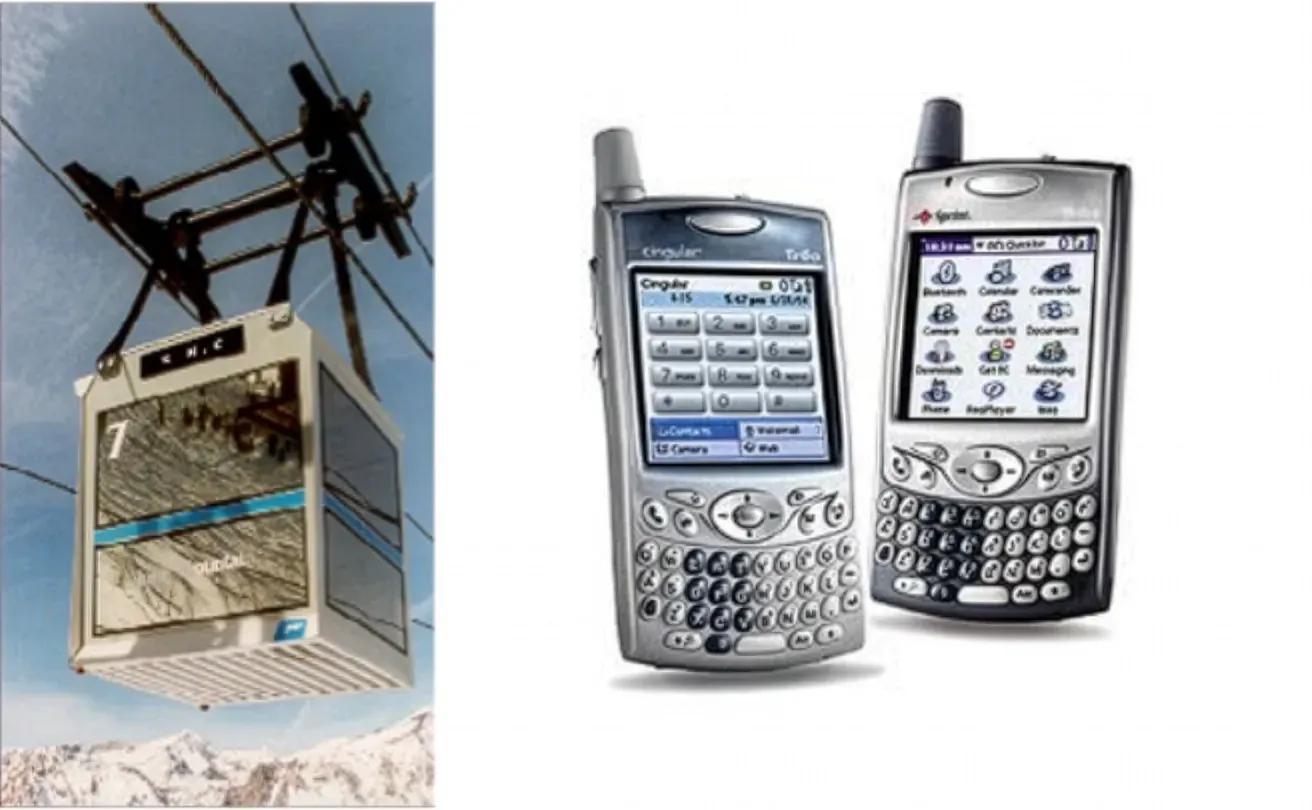
These weren’t just engineering problems. They were human problems. A poorly placed button or an ambiguous indicator light wasn’t an inconvenience; it was a risk. That early grounding in high-stakes physical design taught me something that stuck: the interface is never just the interface. It is the relationship between a person and the world they’re trying to act in.
Then Hollywood called. Sort of.
After starting my own boutique animation firm, Dimensional Studios, I got to work with one of the most creative communities in the world - artists, animators, and the entertainment wizards at Industrial Light and Magic’s Model Shop at Lucasfilm. We built physical models for the Back to the Future trilogy, Ghost, The Fugitive, The Rocketeer, and more. We were laser-cutting physical objects before most people had heard of rapid prototyping, and rendering interactive 3D worlds before most monitors could handle them.
What I learned in that world - how to make something feel real before it exists - turned out to be the most transferable skill I’ve ever had. Every product vision I’ve built since has been, at its core, an act of making the invisible tangible.
Then the phone got smart, and I got to help.
At Palm, I led the human interface team through one of the most exciting product eras in tech history. We shipped the Treo 650 - still remembered as one of the most well-designed smartphones of its generation - and pioneered color displays, Bluetooth, Wi-Fi, cameras, and one-handed navigation at a time when none of that was obvious or easy. I filed patents on interfaces that felt natural in ways that the underlying hardware hadn’t anticipated. The goal was always the same: make the technology disappear, and leave only the experience.
Then I spent nearly two decades re-inventing how humans and computers design together.
At Autodesk, I had the privilege of working on some of the most complex software in the world - tools used by architects, engineers, and manufacturers to shape the physical environment. I built a global user-centered design practice and helped drive adoption of platforms that touched millions of professionals.
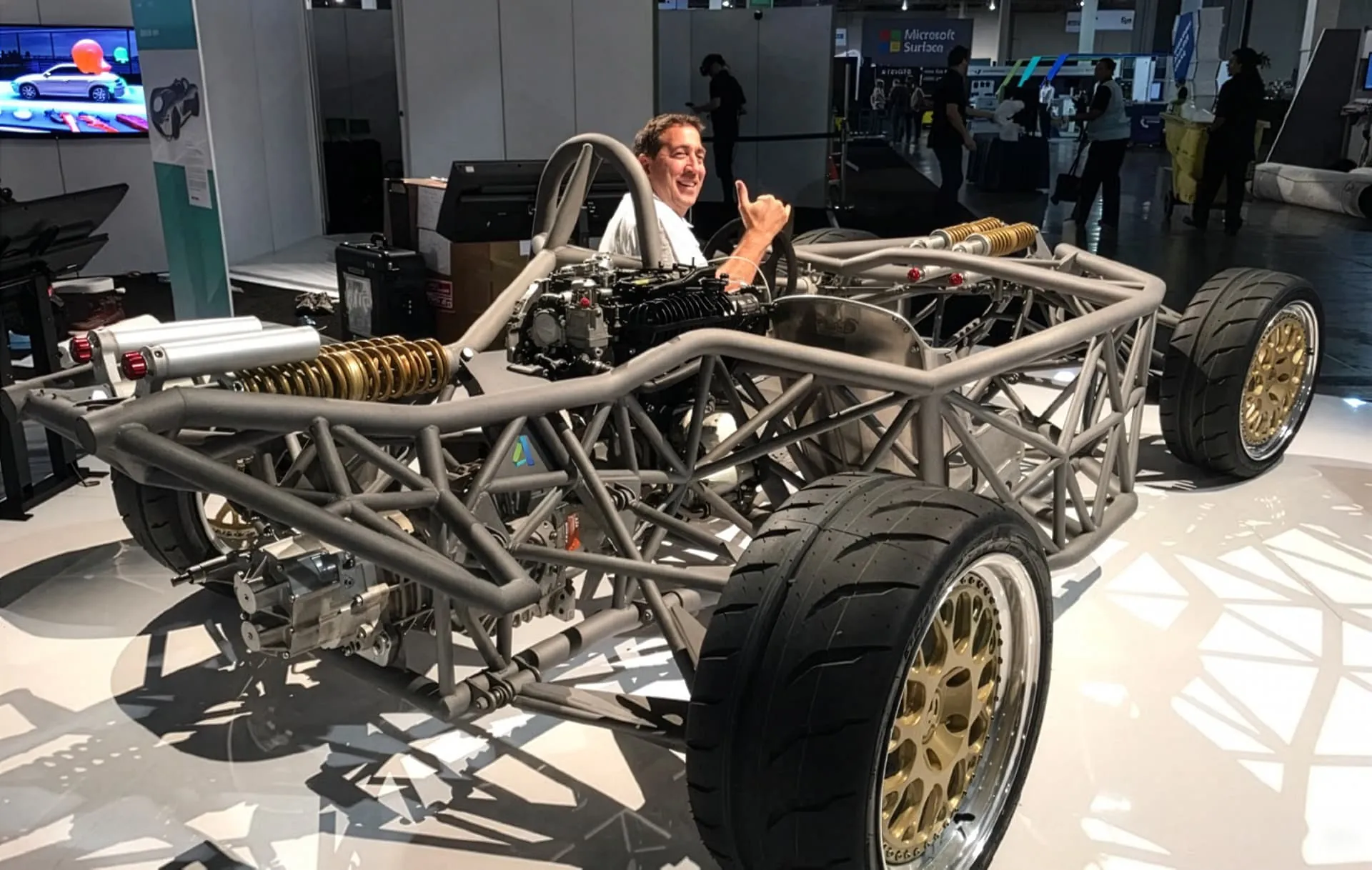
As Senior Director of Research, I co-invented Generative Design with Francesco Iorio - a genuinely new paradigm where evolutionary algorithms don’t replace the designer, they expand what’s possible to design and make. We worked with Mercedes-Benz on lightweight components for Formula One, on new AI tools for Gensler architects designing the new Nvidia headquarters, and Meta’s Quest Pro on new ways to collaborate between content creators, all pushing the question of what design could become when the machine became a collaborator, not just an input device. As a proof point for sustainable manufacturing, I had the honor to work with renowned designer Philippe Starck on the first chair created between an AI and human. At the forefront of advanced manufacturing, our applied research team built one-off desert racing machines for Hollywood, and with NASA/JPL on a prototype lander meant to discover life on Europa. We produced 3D printed metal structures to be implanted in humans during reconstructive surgery…
Along the way, our team published novel research and filed dozens of patents, which helped lay the groundwork for what is now Autodesk’s AI Lab.
It was extraordinary work. And yet.
Something was missing from the wishlist.
For all the industries I’d touched - aerospace, entertainment, architecture, advanced manufacturing, consumer electronics - I had never meaningfully turned my skills toward healthcare. Toward aging. Toward the people who need good design the most and are served by it the least.
That changed in 2023.
I watched my loved ones navigate a system that too often felt designed around processes rather than people. The isolation, the disconnection, the small daily moments where a little more support - a little more presence - could make an enormous difference. I kept thinking: we know how to do better than this. The tools exist. The research exists. What’s missing is the ability to apply these principles where it matters most.
And then, My AI Companion.
When I first learned about what the founders at My AI Companion were thinking - using AI, behavioral science, and compassionate design to support older adults and address the quiet crisis of isolation and cognitive decline - I thought, this is a problem that needs to be solved.
Our team of scientists, researchers, and engineers understand that technology alone is never the answer. The answer is always the human. They are asking the same question I’ve been asking my whole career - What does this person actually need? - and applying it to the highest-stakes domain I can imagine.
I bring to this work a career full of strange and useful experience: physical systems, entertainment and 3D visualization, mobile interfaces, generative AI, over 30 U.S. patents, and decades of building human-centered practices inside organizations that weren’t always sure they needed one. I know how to translate between the world of research and the world of product. I know how to make something feel real before it exists.
And now, for the first time, I get to do all of that for the people who need it most.
I can’t think of a better use for what I’ve learned.
I’m thrilled to be part of this team.
Mark Davis is a multidisciplinary design leader, inventor, and technologist. He has joined My AI Companion as Chief Product Officer to help shape the future of human-centered AI for older adults and caregivers.