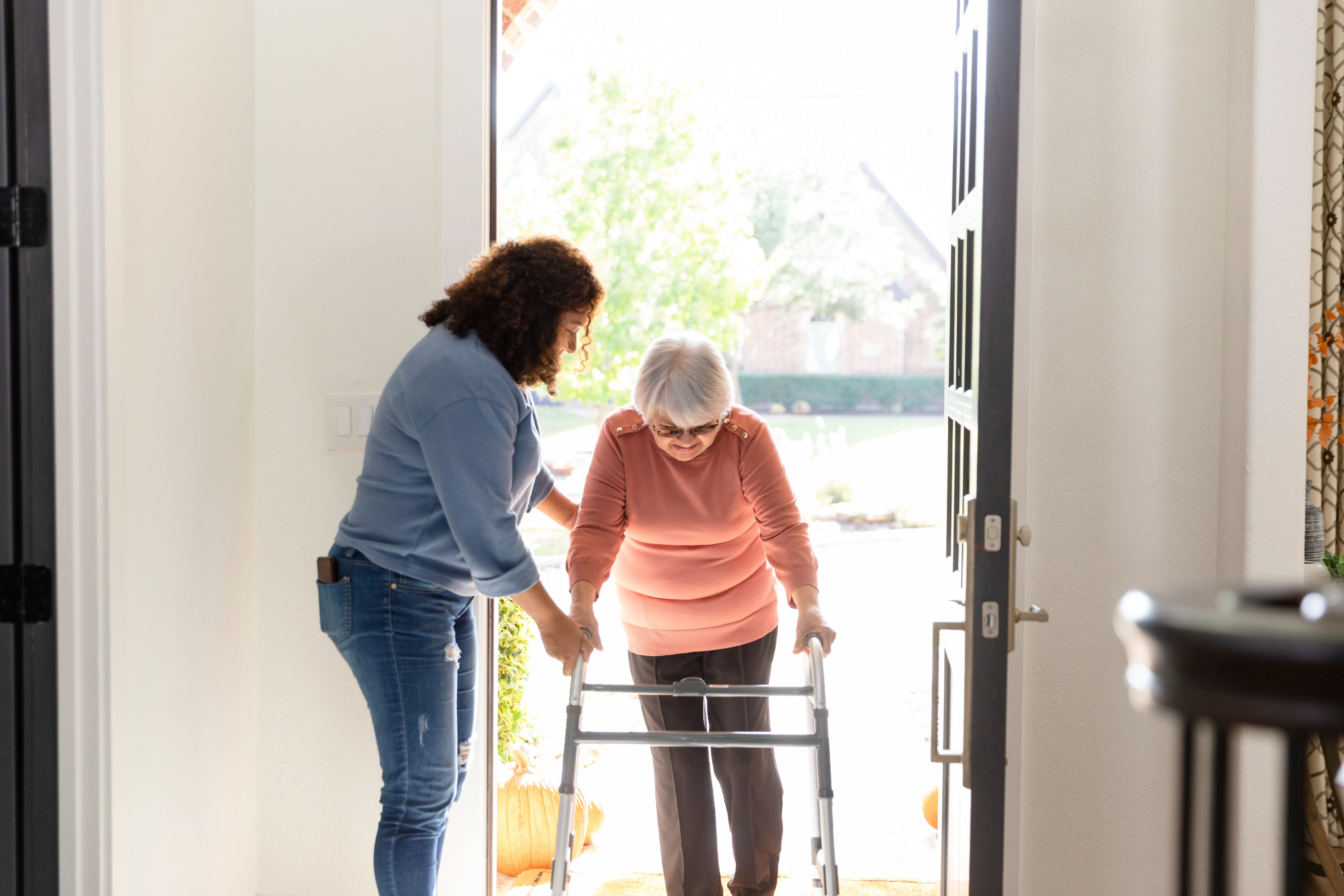
When a Parent Lives Alone: A Family Caregiver's Safety Guide

You notice an unopened stack of mail on your mom’s counter, a minor dent on your dad’s car bumper, or a pantry that looks unusually empty. Over time, these small observations turn into a heavy, looping question: Is it actually safe for my parent to live alone?
If you are asking this question, you are not overreacting. Navigating a parent’s aging process is emotionally challenging, and often filled with anxiety and guilt. But assessing their safety does not have to be a guessing game based entirely on gut instinct. By breaking the big picture down into manageable, objective observations, you can protect your parent’s independence while securing your own peace of mind.
Is it Safe for an Elderly Parent to Live Alone?
Many older adults can and do live alone safely, but a parent’s ability to remain independent depends on a dynamic combination of physical mobility, cognitive health, home safety, and their local support network. Independence is not an all-or-nothing equation. Instead of choosing between total self-reliance and moving a parent out of their home, families can introduce gradual layers of support that adapt as their parent’s needs change.
According to data from the National Institute on Aging (NIA), the vast majority of older adults prefer remaining in their own homes and communities as they grow older, also called aging in place. Living independently offers immense emotional value, preserving a sense of dignity, familiarity, and autonomy.
However, safety requires an honest assessment of reality. To understand whether your parent is still thriving independently or if they require extra help, you need to look past their reassuring words (“I’m doing just fine, dear”) and observe their daily routines, environment, and physical health.
Warning Signs: When Should an Elderly Person Not Live Alone?
It can be difficult to differentiate between normal age-related changes and true safety hazards. A structured way to evaluate the situation is to look at four distinct areas: physical health, cognitive changes, household management, and emotional well-being.
1. Physical and Mobility Changes
Physical changes are often the easiest to spot, yet they carry the highest immediate risk for accidents.
- Unexplained Bruises or Injuries: Your parent may dismiss a mark as “just a bump,” but frequent bruising often points to minor falls or balance issues they are hiding out of fear of losing independence.
- Difficulty Standing or Walking: Notice how they get up from a deep couch or navigate stairs. If they are furniture walking (holding onto walls and tables for balance), their risk of a fall is higher. The CDC reports that one in four older adults falls each year, making falls the leading cause of injury in this age group.
- Changes in Weight or Appearance: A noticeable drop in weight frequently signals that cooking has become too physically taxing or that they are skipping meals. Poor personal hygiene can also mean that getting into the shower has become frightening or physically painful.
2. Cognitive and Memory Signs
Forgetfulness happens to everyone, but progressive cognitive changes impact a parent’s ability to handle basic safety tasks.
- Missed Medications: Look closely at pill organizers. Are doses skipped entirely, or are they taking double doses? Mismanaging prescriptions is one of the most common reasons older adults end up in the emergency room.
- Confusion with Familiar Tasks: This includes struggling to operate a microwave they have owned for years, getting lost on a driving route they take every week, or feeling overwhelmed by a simple choice.
- Disorientation: Forgetting the day of the week occasionally is normal. Forgetting the month, the year, or where they are is a sign that requires an immediate medical evaluation.
3. Household Deficits
A parent’s living space can tell a story they are trying to hide.
- Neglected Household Tasks: Scorched pots and pans point to burners left on and forgotten. A pristine house that suddenly becomes cluttered, dirty, or filled with expired food indicates that daily maintenance has become overwhelming.
- Unopened or Past-Due Mail: Unopened bills, unread notices from utility companies, or unusual purchases can mean your parent is struggling to manage their finances or falling prey to phone scams.
4. Emotional and Social Withdrawal
Isolation is a quiet but severe risk factor for older adults living alone.
- Loss of Interest in Hobbies: If a parent stops attending their weekly bridge game, gardening, or calling friends, it may indicate deep-seated loneliness or developing depression.
- Extreme Mood Shifts: Paranoia, sudden irritability, or unusual anxiety about leaving the house can occur when a parent feels vulnerable or knows their abilities are slipping.
What to do next: If you notice one or two of these signs, it does not mean your parent needs to move immediately. It means it is time to build a safety net. If you want a more comprehensive breakdown of what to look for, read our complete guide: 10 Signs Your Parent Shouldn’t Live Alone.
How to Help an Aging Parent Living Alone: Practical Safety Steps
Improving your parent’s safety does not require a dramatic, overnight lifestyle change. You can implement highly effective, practical adjustments to make their home safer and keep your family connected.
1. Simple Home Safety Modifications
Most houses were not built for aging bodies. You can dramatically reduce the risk of accidents with a few simple, affordable updates:
- Clear the Pathways: Remove throw rugs (a major tripping hazard), clear electrical cords out of walking paths, and rearrange furniture to create wide, open walkways.
- Upgrade the Lighting: Add bright LED nightlights to hallways, bathrooms, and stairwells. As eyes age, they require significantly more light to spot structural changes or obstacles.
- Secure the Bathroom: Install secure grab bars next to the toilet and inside the shower. Place a non-slip rubber mat inside the tub and consider a shower chair if balance is poor.
- Leverage Technology: Simple tech like automatic stove shut-off devices and smart smoke detectors can prevent household disasters before they start.
2. Build a Local Community of Care
If you live far away, you shouldn’t be the only line of defense. Build a small local network of people who see your parent regularly:
- Engage the Neighbors: Ask a trusted neighbor to keep an eye out for unusual changes, like newspapers piling up on the porch or lights left on at odd hours.
- Utilize Community Resources: Connect with your local Area Agency on Aging or use the federal Eldercare Locator to find community resources, low-cost senior transport, and meal delivery services like Meals on Wheels.
3. Create a Safety Call Routine
One of the greatest challenges for family caregivers is the constant weight of the unknown. Did Mom wake up okay today? Did Dad fall on the way to the kitchen?
To bridge this gap without micro-managing or hovering, many families establish a daily safety call. While complex smartphones and tracking apps work for some, they frequently cause frustration for older adults who struggle with technology or forget to charge their devices.
A seamless middle ground is an automated safety call system. Services like My AI Companion call your parent’s existing phone, whether it is a traditional landline or a basic flip phone, at a scheduled time every day.
- How it works: The system places a friendly, automated call to say hello and make sure your parent is safe. Your parent simply answers the phone and presses a button.
- Peace of mind for you: If they answer and confirm they are fine, the system resets. If they miss the call, after a few automated attempts, the system alerts you via text or phone call, allowing you to step in or ask a neighbor or friend to check on them.
- Preserving independence: At just $29.95 a month (with a free trial to see if it fits your family’s routine), My AI Companion provides a critical layer of safety without requiring your parent to learn a new app or wear an intrusive tracking device. It feels like a normal, respectful daily touchpoint rather than a loss of freedom.
Navigating Care Options and Having the Conversation
If your assessment shows that your parent needs more support than minor home modifications can provide, it is time to evaluate broader options and start the conversation.
Understanding the Spectrum of Care
Support is not binary. There are many steps between total independence and an assisted living community:
| Care Level | What It Involves | Best For |
| Independent Living + Safety Calls | Modified home, automated safety calls, local neighbors helping. | Parents who are mostly mobile but need a safety net. |
| In-Home Care Services | Professional aides visit for a few hours a week to help with cooking, cleaning, or bathing. | Parents struggling with physical tasks or nutrition. |
| Assisted Living Communities | Private apartments within a facility providing meals, social activities, and 24/7 staff. | Parents who need regular daily assistance and socialization. |
How to Start the Conversation Without Defensiveness
Approaching an aging parent about their safety is incredibly delicate. If they feel judged or cornered, they will likely shut down.
- Focus on Your Feelings, Not Their Deficits: Avoid saying, “You can’t manage this house anymore.” Instead, try: “I love you so much, and I find myself worrying about your safety when I’m at work. Can we talk about a few things that would give me peace of mind?”
- Keep It Collaborative: Ask for their input. Treat them as the partner in the plan, not the subject of a medical intervention. Ask: “What parts of the house are feeling hard to manage lately?”
- Take Small Steps: You do not need to solve the next ten years in one sitting. Start by suggesting one small change, like a daily safety call trial and installing bathroom grab bars. Let them get comfortable with that level of support before suggesting something more life changing.
Your Action Checklist: Where to Start Today
If you are feeling overwhelmed, pick one concrete step you can complete each week to establish a baseline of safety:
- Conduct a walk-through: Visit your parent’s home with an eye on safety. Check expiration dates in the fridge, look for tripping hazards, and test the lighting in the hallways.
- Gather the emergency contacts: Create a shared digital document or a physical list on their fridge with numbers for their primary doctor, preferred neighbors, local pharmacy, and immediate family members.
- Set up a daily safety call habit: Decide how your family will verify that your parent is safe each day. If you want an automated, stress-free tool that handles this for you without intrusive apps, explore the daily safety call options on our homepage.
Frequently Asked Questions
How can I help a parent who lives alone?
You can check on a parent remotely by establishing a scheduled daily call window, setting up smart home sensors that detect motion in key rooms (like the kitchen or bathroom), or utilizing a dedicated automated safety call service that alerts you immediately if a call is missed.
What do you do when an elderly parent refuses to leave their home?
If a parent refuses to move, focus on making their current home safer through physical modifications and bringing support to them, such as home health aides or meal delivery. Respect their autonomy by looking for middle-ground safety layers rather than forcing an immediate relocation, unless they are in immediate medical danger.
Who can I call to check on an elderly person?
If you are worried about an older adult’s living conditions, you can contact your local Area Agency on Aging to request an evaluation or resource guidance. If you believe they are experiencing severe self-neglect or are unsafe, you can contact Adult Protective Services (APS) for a formal safety assessment. For non-emergency, immediate checks, you can often ask local law enforcement to conduct a wellness check.
Want to know more about setting up an automated safety call for your parent? Check out our website.