The Rural/Urban Divide in Supporting Adults as they Age
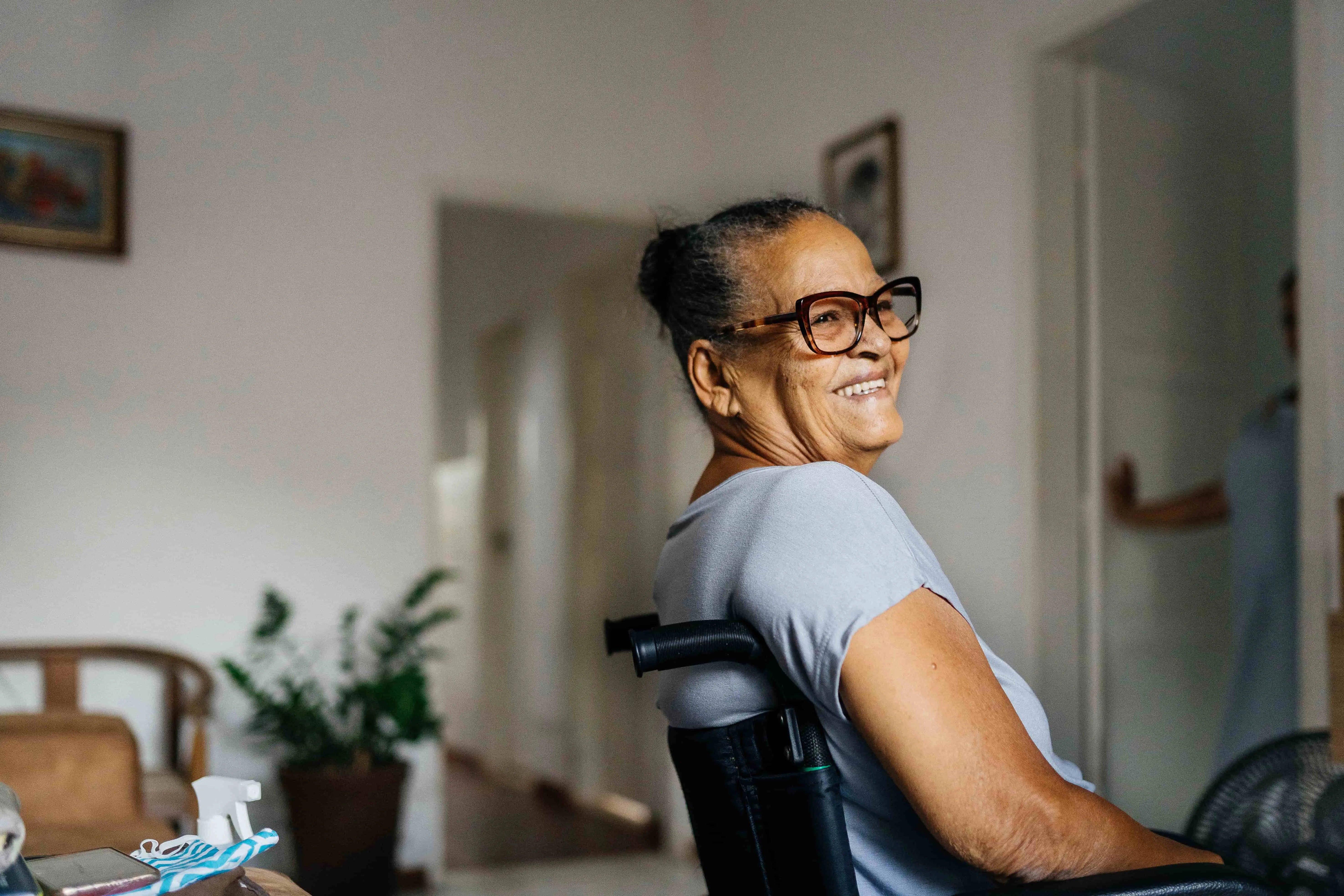
In rural America, aging in place is more than a decision of convenience, it’s the only way to stay connected to everything you’ve ever known. For the millions of older adults living in rural communities, the Urban/Rural Divide is a clinical reality defined by geographic isolation, shrinking provider networks, and a receding healthcare infrastructure. As the distance between a patient’s porch and the nearest specialist grows, so does the silent, structural risk.
We look toward 2026 and beyond and see that the challenge is clear: we cannot solve a rural structural problem with urban-centric tools. We need solutions that work when the physical infrastructure doesn’t. The most powerful tool for bridging this gap isn’t a new app or a high-tech wearable, so foreign that it may not be trusted by the very population we are trying to serve. It’s something that older adults are comfortable using and that already exists in many homes. It’s the telephone, be it a smartphone or landline. By positioning daily, phone-based conversation as a core support service, we can transform the living room of an isolated individual, ensuring that geography no longer determines a person’s access to a healthy, connected life.
The Geography of Isolation: A Structural Problem
Social isolation among rural older adults is often mischaracterized as a personal emotional state. In reality, it is a structural byproduct of shifting demographics and economics. Today, nearly 21% of the U.S. nonmetro population is over age 65, compared to just 17% in metro areas. As younger populations migrate toward urban centers for work, rural communities are left with an older population that wants to age-in-place. The children and neighbors who once provided the daily check-ins that caught health declines early are no longer close enough to just pop-in and any solutions must take into consideration things like limited bandwidth, local culture, and a fragile community relationship with foreign technologies.
When the nearest neighbor is five miles away and the nearest child is over 50 miles away, isolation is no longer a choice, but a fixed feature of the landscape. This disconnection is a primary driver of the older adult rural care gap, leading to higher rates of untreated chronic health conditions and a silent epidemic of loneliness for those who wish for companions that the U.S. Surgeon General has likened to smoking 15 cigarettes a day.
The Resource Gap: When the System Can’t Keep Up
The infrastructure intended to support aging (senior centers, home-health agencies, and community clinics), is under unprecedented strain. In 2026, the data remains stark: over 92% of rural counties are designated as primary care health professional shortage areas (HPSAs).
For a rural health director or an Area Agency on Aging (AAA) manager, the math simply doesn’t add up.
- Staffing Shortages: There are not enough nurses or community health workers to perform manual wellness checks for every isolated adult.
- Transportation Barriers: Traditional interventions like community meals or senior centers require the participant to drive or use public transit, both of which become inaccessible as mobility and vision decline.
- Financial Strain: Rural hospitals, many operating on negative margins, have been forced to cut the very outreach programs that prevent emergency room visits.
The caregivers in the sandwich generation, those living 50 or 100 miles away from a rural parent, feel this gap emotionally every time a phone call goes unanswered. They know that if Mom falls or misses a dose of medication, it might be days before anyone notices.
Why Traditional Programs Fall Short
We must acknowledge the efforts of existing programs while being candid about their limitations. Many rural communities rely on volunteer-driven check-in calls like Warmline or Meals-on-Wheels. These are heroic efforts, but they aren’t available around the clock and conversation is a benefit, not the primary product. In addition, many existing digital solutions are consumer-facing health technologies designed for the more urban, tech-savvy older adult. They require high-speed broadband, still a luxury in many rural zip codes, and a level of smartphone literacy that can be a barrier for those with cognitive decline or arthritis.
Furthermore, even if someone has access to these automated check-in systems, which many do not, they are one-directional: a robotic voice asking the user to “press 1 if you are alive.” These systems may track survival, but they do not track wellbeing. They miss the subtle shifts in speech, memory, and mood that signal a looming health crisis.
The Power of the Phone: A Solution Built for Rural Realities
The most effective technology is the one that is already in every home. An AI-driven phone-based companion, designed with older adults for older adults, utilizes the existing telecommunications infrastructure to provide a sophisticated program in language that feels familiar and comfortable.
By using natural language processing (NLP) and voice-based AI, an AI-driven model starts to address the problems:
- No App, No Barrier: There is no new device to learn, no password to remember, and no need for Wi-Fi. The interaction is a simple, daily phone call or text.
- Meaningful Engagement: Unlike a “press 1” system, an AI companion conducts a bi-directional conversation. It asks about the user’s day, remembers their grandchildren’s names, and monitors their mood.
- Daily Safety Calls: When a conversation is missed, the AI can alert your trusted community of caregivers to check in on the older adult.
This is not about replacing human care; it is about providing a safety net that works 24/7, bridging the gap between monthly doctor visits and the isolation of daily life.
Why Professionals Trust the Model
For the health professional, an intervention is only as good as its evidence. This is why we prioritize clinical rigor over marketing jargon.
- The VA Clinical Trial: We are currently working toward a clinical trial with the VA to evaluate the impact of conversational AI on veteran health and isolation. This research is critical in proving that a phone call can lead to meaningful reductions in avoidable hospitalizations.
- Dartmouth-Led Science: Our science team, led by Dr. Karen Fortuna, our Chief Science Officer, has published peer-reviewed research and has over a dozen studies in development. We are focused on the intersection of cognitive health, speech patterns, and social determinants of health.
- Accountable Care Ready: By 2031, the U.S. Centers for Medicaid and Medicare Services (CMS) aims to have 100% of rural Medicare/Medicaid beneficiaries in accountable care relationships. Our platform is designed to provide the continuous data stream that these Accountable Care Organizations (ACOs) need to manage population health effectively in low-density areas.
Conclusion: A More Connected Future
The rural/urban divide in older adult care is a challenge of access, not a lack of community resilience. Rural older adults deserve a system that respects their desire to stay home while providing the safety of a modern medical network.
By leveraging the simple power of a daily conversation, we can move from a model of reactive crisis to one of proactive connection. We are in the early stages of this journey, and while the scale is not yet universal, the science is clear: a daily conversation is more than just social, it can also be a life-saving clinical intervention.
TAG #CMMI @CMS
Resources & Citations
- U.S. Department of Agriculture (USDA) Economic Research Service (2026). Rural America at a Glance: 2025 Edition. Highlights the demographic shift and aging populations in nonmetro areas.
- CMS Innovation Center (2026). LEAD (Long-term Enhanced ACO Design) Model. Outlines the federal pathway for 100% accountable care in rural areas by 2031.
- The Commonwealth Fund (2025). The State of Rural Primary Care in the United States. Details the shortage of physicians and the impact on chronic disease management.
- Journal of Medical Internet Research (2025). Efficacy of Voice-Based AI in Reducing Social Isolation Among Older Adults. Peer-reviewed study on conversational interventions.
- New England Journal of Medicine (2025). From Bandwidth to Bedside: Bringing AI-Enabled Care to Rural America. The potential of AI to transform rural care delivery.